
Why Men Need Other Men After Retirement
This article explores why meaningful friendships and intentional community are essential for men to stay connected, purposeful, and spiritually strong after retirement.
COMMUNITY
Vernon Delpesce
7/19/20265 min read

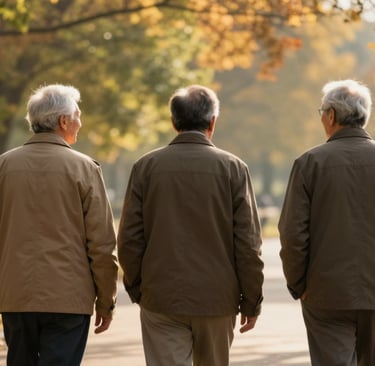
Why Men Need Other Men After Retirement
Retirement takes away more than a job.
For many men, it quietly takes away their closest relationships too.
We may not recognize those relationships as friendships while we are working. They are simply the people we see every day—the coworker down the hall, the person we eat lunch with, the customer who stops by, or the colleague we call when we need advice.
Then retirement arrives.
The calendar suddenly opens. The phone rings less often. Conversations that once happened naturally now require effort. Before long, a man can discover that much of his social life was connected to a workplace he no longer enters.
Retirement may give us freedom, but it can also leave us isolated.
That is why men need other men after retirement.
Men Often Build Friendships Side by Side
Many women are comfortable building relationships through conversation. Men often build relationships differently.
We connect while doing something.
We work on a project, play golf, go fishing, attend a ballgame, volunteer, drink coffee, or sit beside one another at church. The activity gives us a reason to be together, and the relationship gradually develops.
This is one reason retirement can be so disruptive.
When the shared activity disappears, the relationship often disappears with it.
No one made a conscious decision to end the friendship. The structure that supported it simply went away.
Months can pass before we realize how much we miss the conversations, laughter, teasing, encouragement, and sense of belonging that came from being part of a team.
Isolation Usually Happens Quietly
Most men do not wake up one morning and decide to become isolated.
It happens gradually.
We tell ourselves that we enjoy the quiet. We stay busy with projects around the house. We watch television, scroll through our phones, or spend more time alone. We may talk with our spouse, children, or grandchildren, but those relationships do not completely replace the need for friendships with other men.
Over time, our world can become smaller.
The problem is not simply that we need more activities. We need people who know us.
We need men who notice when we are missing.
We need someone who will ask how we are really doing—and care enough to listen to the answer.
We need friends who can laugh with us, challenge us, pray with us, and remind us that our lives still matter.
Retirement Is a Major Life Transition
Retirement is often presented as a reward for decades of hard work. And in many ways, it is.
But it is also one of life’s biggest transitions.
Work gives us more than income. It gives us structure, identity, responsibility, goals, and relationships. When work ends, we have to rebuild many of those things in a new way.
That can be difficult for men who have spent most of their adult lives defining themselves by what they do.
One day, people are asking for our opinion, depending on our leadership, and filling our calendars with meetings. The next day, we are standing in the kitchen wondering what we are supposed to do until lunch.
It can be disorienting.
Other men who are walking through the same season understand that experience. They know the strange mixture of freedom and loss. They understand the desire to remain useful while also learning to slow down.
There is comfort in being with people who do not require a lengthy explanation because they are living through many of the same questions.
Community Helps Us Keep Growing
One of the dangers of retirement is that we can become too comfortable.
Without coworkers, deadlines, or responsibilities, it becomes easy to stop challenging ourselves. We can settle into routines that feel safe but do not help us grow.
Good friendships keep us engaged.
Other men expose us to new ideas. They recommend books, invite us to activities, ask thoughtful questions, and challenge assumptions we may have carried for years.
They also help us see ourselves more clearly.
A good friend can tell when we are becoming discouraged, cynical, overly busy, or withdrawn. He can say something that a spouse or family member may have been trying to tell us for months—and somehow we finally hear it.
We all need people who will encourage us without flattering us and challenge us without condemning us.
That becomes especially important as we grow older.
Men Need a Place to Be Honest
Many men have spent their lives learning how to appear strong.
We know how to say, “I’m fine.”
We know how to change the subject, make a joke, or talk about the weather when the conversation becomes uncomfortable.
But retirement does not protect us from difficulty.
We still face health concerns, grief, family problems, financial pressure, disappointment, and fear. We may struggle with a loss of purpose or wonder whether our most meaningful years are behind us.
Carrying those burdens alone makes them heavier.
Men need safe places where they can speak honestly without feeling weak or embarrassed. We need friends who will listen without immediately trying to fix everything.
Sometimes the most helpful words a man can hear are, “I understand. I have struggled with that too.”
Honesty breaks the lie that we are the only ones having a difficult time.
Faith Was Never Intended to Be Lived Alone
The Christian life is personal, but it was never meant to be private.
Throughout Scripture, believers are encouraged to gather, encourage one another, carry one another’s burdens, pray for each other, and spur one another toward love and good works.
We need people who will remind us of what is true when life becomes difficult.
A group of men does not need to be overly formal or complicated. It may begin with coffee around a table. It may include a short devotional, a book discussion, a service project, or simply time to talk.
What matters is consistency.
Trust rarely develops in one meeting. It grows when men continue showing up.
Over time, ordinary gatherings can become sacred spaces—places where laughter, wisdom, prayer, friendship, and faith come together.
What I Have Learned Through ReGroup
In 2021, I helped start a small gathering of eight men.
The idea was simple: bring retired and semi-retired men together for fun, fellowship, and conversations about finishing well.
What began as a small group became something much more meaningful.
The men did not need another meeting to attend. They needed community. They needed a place to belong, contribute, learn, laugh, and be encouraged.
I have seen how powerful it can be when men gather consistently.
Friendships form. Stories are shared. Faith deepens. Men discover that they still have wisdom to offer and opportunities to serve.
Perhaps most importantly, they realize they do not have to navigate this season alone.
How to Begin Building Friendships After Retirement
Building relationships takes more intention after retirement, but it is possible.
Start small.
Invite another man to have coffee. Join a Bible study, volunteer team, service club, exercise group, or community organization. Reconnect with someone you worked with years ago.
Do not wait for someone else to organize everything.
Be the person who sends the invitation.
You might say:
“Would you like to meet for coffee next week?”
“I’m getting a few men together for breakfast. Would you join us?”
“I’ve been thinking about starting a small group for retired men. Would that interest you?”
Not everyone will respond, and that is all right. Keep extending invitations.
Strong communities often begin because one person decides to open a door.
We Still Need One Another
Retirement can be one of the most meaningful seasons of life.
We have experience, perspective, time, and wisdom that we may not have possessed when we were younger. But those gifts are best developed and shared in relationship with others.
Men need other men who will walk beside them.
We need people who will celebrate the good days and remain present during the difficult ones. We need friends who will remind us that retirement is not the end of our usefulness.
Our careers may be finished, but our calling to love, serve, grow, encourage, and contribute continues.
Growing older is inevitable.
Growing older alone does not have to be.